The Imagery from Calligraphy
This output is interpretive artwork criticism only and not clinical diagnosis or therapy advice.
01 / About this report
FILE: ABOUT.TXT · READThis report is an interpretive and critical reading for Computational Media Artworks (CMAs). It uses the Subject-Structure-Discourse (SSD) framework, adapted from Lacanian psychoanalytic concepts, as an additional lens for understanding how an artwork operates. It is not a quality rating or value judgment of the work.
SSD approaches the artwork as an active subject that organizes concept, medium, discourse, and social bond in public form. The goal is to help artists, curators, and viewers access a psychoanalytic reading that clarifies what the work is doing. This model currently applies to CMA works and does not cover every category of art.
02 / Artwork Overview
FILE: ARTWORK_OVERVIEW.TXT · READSplit Subject
Neurotic-leaning artwork
The discourse of Artwork
03 / Subject Layer
FILE: SUBJECT.TXT · READThe Split Artwork ($)
Read the artwork as split in two layers: what it clearly shows and what it implies. Pay attention to the gap between these layers, where tension and contradiction often emerge.
Explicit Statement
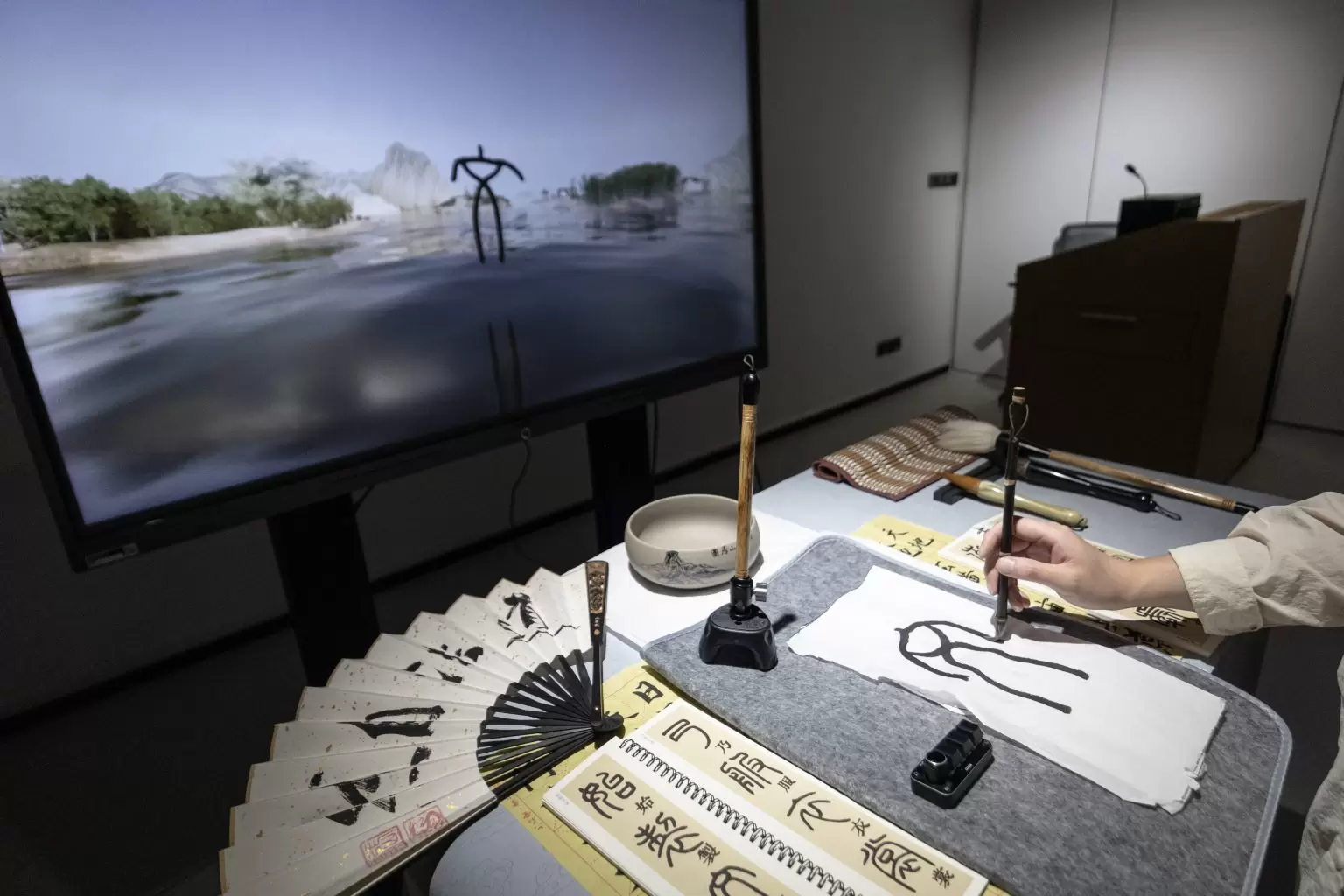
The artwork is an interactive installation where participants write seal-script Chinese characters in the air, which are then recognized by the system and translated into corresponding scenes, materials, or actions within a virtual Xuan-paper world. This digital system serves as an interface connecting calligraphic writing to immersive virtual experiences.
Evidence: DescriptionThe system recognizes the character and translates it into a corresponding scene, material, or action within a virtual Xuan-paper world.
Implicit Enunciating
Beyond its surface setup, the work positions writing as an act of navigation and heritage transmission, using calligraphic gestures to unlock and experience craft knowledge in a digital space.
- The installation transforms script into a gateway for activating intangible cultural heritage.
- Writing becomes a navigational act, linking personal memory with collective craft knowledge.
- Characters function as symbolic keys, bridging digital and traditional forms of cultural transmission.
Subject of Desire
Read the work through the Need-Demand-Desire chain: what motivates the work, what artistic means it asks for, and what unresolved remainder continues to drive it.
The Need
The core motivation is to preserve and revitalize intangible cultural heritage—specifically, the craft and memory of Xuan-paper making—by rendering it accessible and experiential through digital means.
- Addresses the need to connect contemporary audiences with traditional crafts.
- Responds to the risk of cultural practices being forgotten over time.
- Ensures craft knowledge is not simply stored but actively experienced.
The Demand
The work pursues its preservation goal through an interactive system where writing seal-script characters becomes a dynamic interface, translating gesture into immersive virtual scenes that embody craft knowledge.
- Utilizes writing as a navigational interface to unlock digital heritage content.
- Employs real-time recognition and translation of characters into virtual actions and materials.
- Relies on participant interaction for activating cultural knowledge.
The Desire
An enduring openness remains: the gap between digitally reactivating traditional practices and the full, embodied transmission of their original context—what cannot be entirely captured or restored by digital mediation.
- Virtual activation cannot wholly substitute lived, embodied experience.
- Some aspects of traditional craft remain irrecoverable through digital systems.
- The translation from script to world only partially closes the distance between present and past.
The Object-a
The seal-script character written by the participant is the focal enigma: it simultaneously references ancient tradition and unlocks new virtual experiences, drawing persistent attention to its ambiguous power.
- Functions as concrete touchpoint and symbolic artifact.
- Embodies the mystery of transmission and recognition.
- Appears repeatedly as trigger and object in the interactive system.
The Drive
The core mechanism is the repeated act of writing and re-writing characters, each time unlocking new or repeated scenes and actions, sustaining engagement and continual reactivation of craft knowledge.
- Participant writes characters to repeatedly access virtual scenes.
- System recognition and transformation creates an interaction loop.
- Ongoing engagement sustains the activation of cultural memory.
The Jouissance
Read jouissance as the work's satisfaction effect: how it fulfills or exceeds expectations for artist and audience, beyond simple enjoyment.
Explicit enjoyment
Participants experience immediate satisfaction from the seamless recognition and transformation of their written gestures into immersive digital environments, directly connecting action to visual and material outcomes.
The polished interface and responsive system provide a clear, tangible reward through real-time feedback and visually compelling representations of cultural scenes.
- Instant feedback from system enriches sense of agency.
- Realism in digital scenes enhances immersive quality.
- Smooth technical execution elevates the interaction experience.
Implicit enjoyment
Participants derive satisfaction from the deeper intellectual process of connecting writing, cultural symbols, and intangible heritage, reflecting on the continuity and transformation of tradition within a digital era.
There is a subtle pleasure in using a simple act—writing—to unlock layers of history, knowledge, and collective memory, fostering thoughtful engagement with cultural preservation.
- Stimulates reflection on the preservation of intangible heritage.
- Cleverly leverages traditional forms for new cultural experiences.
- Engages memory and imagination through symbolic navigation.
04 / Structure Layer
FILE: STRUCTURE.TXT · READThe formalization
Read formalization as the process that turns an intangible impulse into a shareable CMA artifact through recognizable artistic grammar: legible media carriers, interaction mechanisms, and technical protocols.
The Censorship
Read censorship as the filtering process that makes a work publicly readable through three forces: separation from the artist, platform or institutional framing, and wider public feedback.
Author separation
Jiayang Huang’s authorial intent centers on bridging individual subjectivity, cultural heritage, and technological innovation through new media art. Her practice emphasizes the convergence of psychoanalytic exploration and interactive systems, using the medium to activate personal and collective modes of engagement with tradition. The work demonstrates a sustained interest in connecting ancient narrative forms with contemporary digital experience.
- Focus on linking personal subjectivity with collective heritage through interactive media.
- Research interests include psychoanalysis, artistic practice, and technological translation.
- Author aligns material processes and script forms to explore cultural transmission.
Evidence: BiographyJiayang’s research lies at the intersection of artistic practice, technological media, and psychoanalysis, with a particular focus on individual subjectivity and the unconscious mind.
Platform ideology
The platform positions the project as a model of bidirectional translation between lived experience and symbolic representation, aligning with institutional interests in heritage activation and audience engagement. This framing underscores the use of seal script as both cultural signifier and interface, emphasizing the curatorial mission of bridging historical practices with contemporary digital art. The platform highlights the work's role in supporting knowledge transmission and participatory learning.
- Emphasizes the project’s support for heritage transmission through interactive navigation.
- Frames writing as the interface connecting users to craft knowledge and cultural history.
- Highlights seal script’s function as both visual form and cultural pivot for audience engagement.
Evidence: PlatformParticipants appreciated how writing became a navigational interface connecting characters to craft knowledge, supporting heritage transmission and character memorization.
Other reviews
External/public feedback traces are limited, so the following is AI feedback: The project effectively invites audience participation by allowing users to transform written characters into immersive digital rituals, encouraging experiential contact with intangible heritage. Its balanced formalization ensures clear access to both the aesthetic and educational dimensions of craft-making processes. The explicit mapping between characters and digital actions grounds the interaction and supports lasting engagement.
- Interactive system directly connects user actions (writing) to virtual craft processes.
- Approachable navigation supports both memorization and deeper cultural learning.
- Explicit mappings reinforce clarity of intent and audience understanding.
Evidence: DescriptionThe system recognizes the character and translates it into a corresponding scene, material, or action within a virtual Xuan-paper world.
Structure mode
Read structure mode as a classification of the concept-form relation after formalization and censorship: Psychotic-leaning (concept > form), Perverse-leaning (form > concept), or Neurotic-leaning (form approximately concept).
Mode type
The work demonstrates a high degree of formalization and coherence between concept, artistic grammar, and public readability, exemplifying a neurotic-leaning structure. Concept and form reinforce each other, enabling the translation of traditional knowledge into an accessible interactive system.
Clear rules and mappings guide both user interaction and meaning, allowing the audience to meaningfully navigate between script and heritage process. The rigorously structured navigation serves as a framework where intention, aesthetic, and method are in productive harmony.
Evidence: Platform, DescriptionSubtype
The project exhibits a closed, systematized mapping between each written character and its corresponding virtual action or scene, demonstrating the obsessive-leaning subtype of neurotic formalization. By structuring specific, repeatable relationships, the work reduces ambiguity and ensures a precise alignment between user input and digital output.
This tight correspondence reinforces clarity and fosters an explicit understanding of the linkage between traditional script and craft knowledge. The systematic design leaves little interpretive openness, anchoring the interactive experience in well-defined, recognizable rules.
Evidence: Description05 / Discourse Layer
FILE: DISCOURSE.TXT · READFour elements
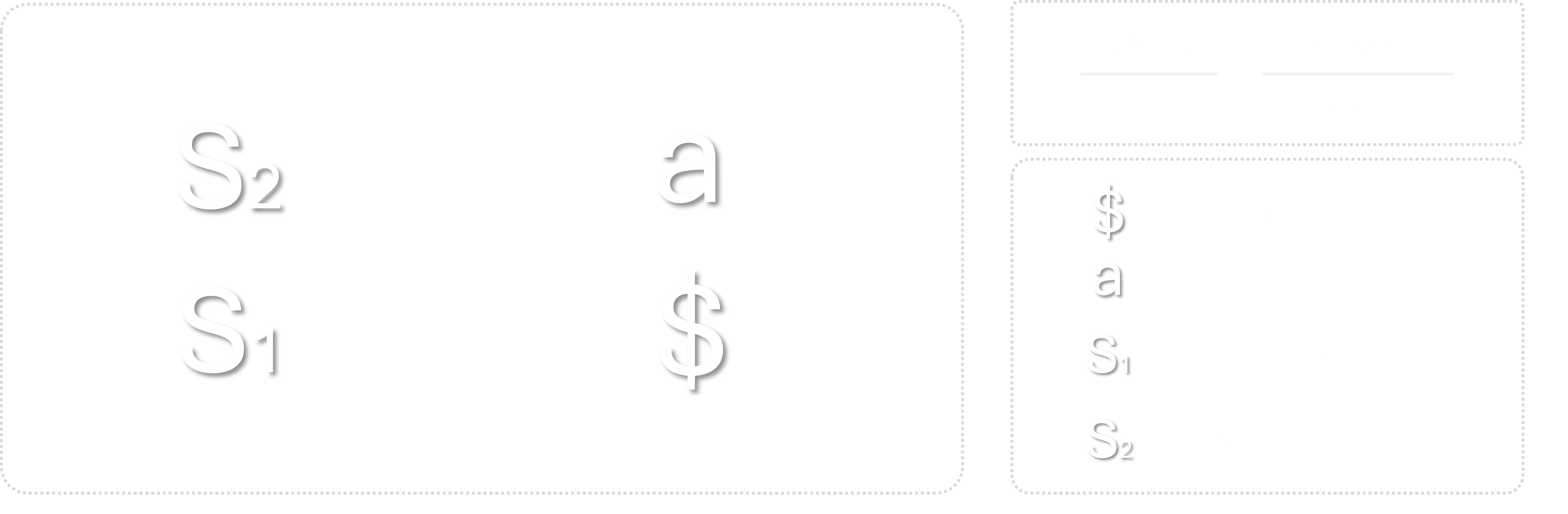
Read the work through four discourse elements: S1, S2, a, and $. In 3.1.1-3.1.4, assign one primary candidate to each element by building on the Subject Layer (1.0) and Structure Layer (2.0). These elements work together as one system for reading how the artwork speaks.
Master signifier (S1)
The master signifier organizing this work is the Seal-Script Navigation System: a distinctive interactive grammar that allows calligraphic gestures to serve as access keys within a structured virtual archive. The experience is defined through this interface, which transforms writing from symbolic mark into a mode of direct experiential traversal. By centering this navigation model, the work generates its recognizability as a paradigm of heritage-activated interaction.
Evidence: Platform, DescriptionKnowledge (S2)
The work is authorized and structured by the logic of an experiential archive: bridging practice-based research, systematic digital mapping, and bidirectional heritage translation. This knowledge framework operationalizes the papermaking process into a network of zones and character-targets, ensuring that cultural knowledge is not simply displayed but actively generated by the participant's actions. The system's order makes interaction coherent, legible, and credible as a vehicle for cultural preservation.
Evidence: Biography, Platform, DescriptionEnigma (a)
The enigmatic element is the seal-script character, which serves not only as a signal from tradition but as an operational gateway within the system. Each written form stands at the threshold between symbolic heritage and immersive digital action, capturing persistent attention by both referencing deep cultural memory and triggering immediate experiential change. Its ambiguous force anchors the user's desire and drives participation in the archive.
Evidence: Description, PlatformContradictions ($)
A core contradiction permeates the work: the promise of digital mediation to reactivate intangible heritage stands in tension with the impossibility of fully re-embodying the depth and context of traditional practice. Experiencing the system foregrounds both the expansion of craft access and the subtle loss intrinsic to translating embodied knowledge into procedural rules. This unresolved split energizes the structure, compelling engagement and reflection.
Evidence: Platform, DescriptionPositions
Read Agent - Other - Production - Truth as a fixed discourse vector: the stable route through which discourse is organized. Agent initiates, Other is addressed, Production is generated, and Truth remains the hidden driver. This step maps S1, S2, a, and $ into these positions to reveal the discourse pattern.
Discourse of artwork
Read this step as choosing the artwork's dominant speaking style: Signature, Archive, Scribble, or Errata. Judge it through two linked views: what leads in the discourse (style, knowledge, contradiction, or enigma), and which element takes structural lead (S1, S2, $, or a). Together, these cues identify the pattern that most strongly organizes the work.
Discourse Type
The discourse type is Archive: the work is organized as an experiential system where knowledge and procedural order take the lead as Agent, structuring not only what is possible but how the public is addressed. The participant is received as the Other to be activated, processed, and incorporated into the archive via the enigmatic seal-script character, which serves as an interface-object handled by the system. Through this interaction, a division emerges—the contradiction between digitally mediated knowledge and bodily heritage—producing a subordinated, reflexive subject position for the participant as they encounter both connection and loss. Underlying this is the master signifier of the Seal-Script Navigation System, anchoring the authority and recognition that gives the knowledge-order force and fluency. The archive’s logic ensures both clarity and productive tension, inviting active submission to its rules while foregrounding the complexities of cultural transmission.
Evidence: Biography, Platform, Description