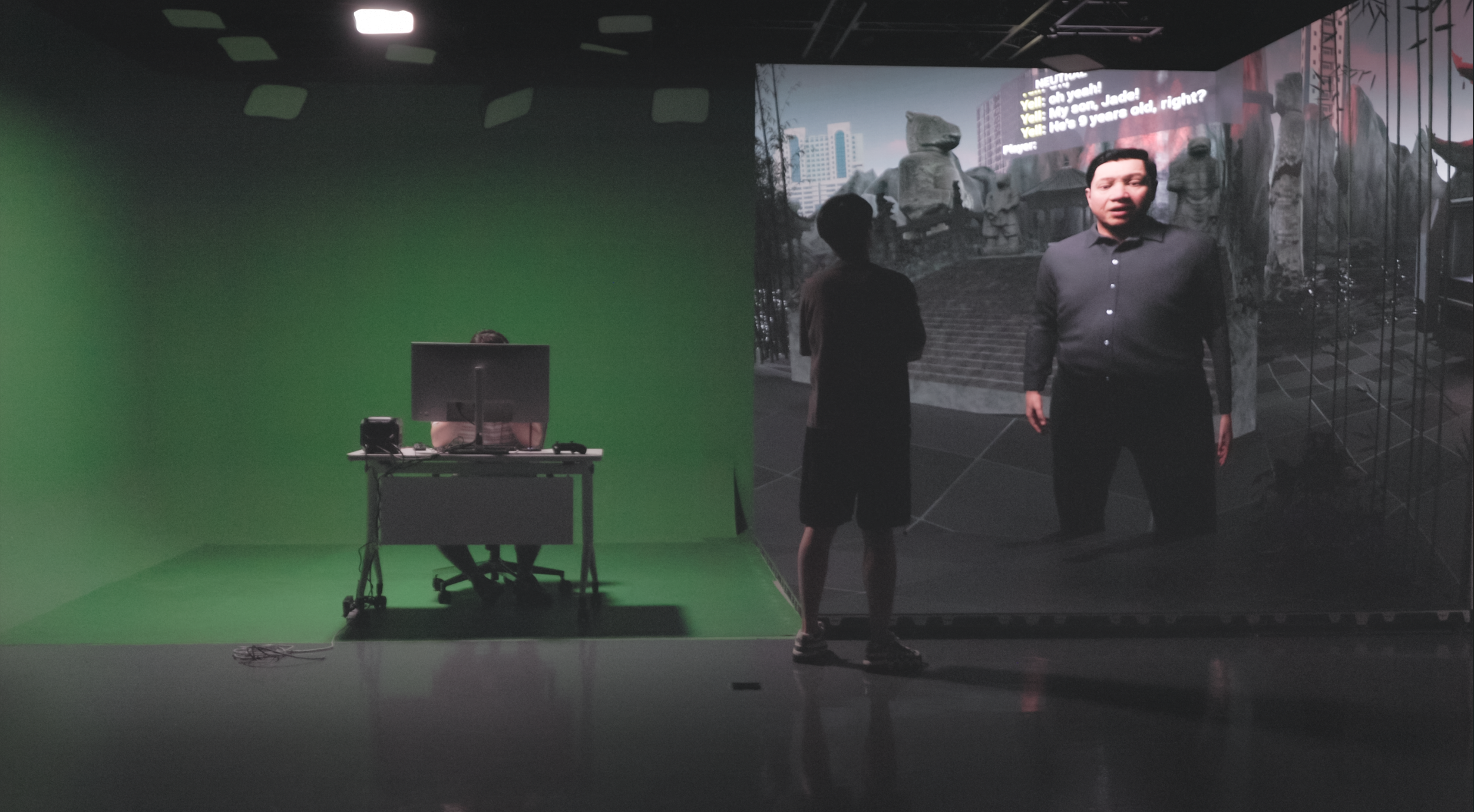
The Dream within Huang Long Cave
This output is interpretive artwork criticism only and not clinical diagnosis or therapy advice.
01 / About this report
FILE: ABOUT.TXT · READThis report is an interpretive and critical reading for Computational Media Artworks (CMAs). It uses the Subject-Structure-Discourse (SSD) framework, adapted from Lacanian psychoanalytic concepts, as an additional lens for understanding how an artwork operates. It is not a quality rating or value judgment of the work.
SSD approaches the artwork as an active subject that organizes concept, medium, discourse, and social bond in public form. The goal is to help artists, curators, and viewers access a psychoanalytic reading that clarifies what the work is doing. This model currently applies to CMA works and does not cover every category of art.
02 / Artwork Overview
FILE: ARTWORK_OVERVIEW.TXT · READSplit Subject
Neurotic-leaning artwork
The discourse of Artwork
03 / Subject Layer
FILE: SUBJECT.TXT · READThe Split Artwork ($)
Read the artwork as split in two layers: what it clearly shows and what it implies. Pay attention to the gap between these layers, where tension and contradiction often emerge.
Explicit Statement
The artwork is an AI-driven, interactive narrative experience where players navigate a virtual rendition of Huanglong Cave, engaging in dialogue with the character Yell at different life stages. The project incorporates mixed reality elements and draws on monologue-based animation and family archives.
Evidence: Others, Descriptionan AI-driven interactive and immersive narrative experiencefeatured the interactive narrative game The Dream within Huanglong Cave, a monologue-based animation ... and a selection of related family archives.
Implicit Enunciating
Moving beyond technical execution, the work enacts a deeper inquiry into psychological self-reflection, making use of personal and familial narrative layers. It investigates the continually unresolved nature of self-understanding and the meaning created through the search itself.
- Invites players to reflect on their own inner lives and unconscious motivations.
- Frames personal and intergenerational relationships as sites of both conflict and reconciliation.
- Positions the process of seeking understanding as a meaningful experience in itself.
Subject of Desire
Read the work through the Need-Demand-Desire chain: what motivates the work, what artistic means it asks for, and what unresolved remainder continues to drive it.
The Need
The necessity driving the artwork is a motivation to probe internal psychological processes, particularly those related to subjectivity, family dynamics, and unresolved emotional tensions.
- Aims to unravel internal conflicts and subconscious motivations.
- Addresses the artist's own experiences and the transmission of intergenerational trauma.
- Seeks to offer audiences an active context for self-examination.
The Demand
To address internal psychological complexity, the artwork employs an interactive narrative game format, leveraging AI to foster responsive dialogue and immersive exploration.
- AI-driven game mechanics enable dynamic storytelling.
- Player engagement is structured through branching dialogues with a central character.
- The mixed reality setting facilitates a tangible sense of presence and emotional proximity.
The Desire
The artwork leaves open the question of whether true understanding or closure is ever attainable, both for the protagonist and the participant. The experience foregrounds the inherent ambiguity and ongoing pursuit of personal meaning.
- Highlights gaps that cannot be bridged by dialogue alone.
- Maintains ambiguity in emotional resolution for both player and character.
- Emphasizes the perpetual act of searching rather than arriving.
The Object-a
The digital avatar Yell remains an enigmatic focal point: encountered repeatedly in varying life stages, he defies easy interpretation and acts as both mirror and riddle for the player.
- Yell's evolving character sustains curiosity and emotional tension.
- His ambiguous responses prompt self-questioning and projection.
- The avatar functions as a recurring site of unresolved desire.
The Drive
The sustained mechanism at play is a loop of player-avatar dialogue, where each interaction restarts the search for understanding and emotional breakthrough—fueling continued involvement.
- Each conversation with Yell initiates a new interpretive cycle.
- Repeated attempts to solve Yell’s dilemmas mirror ongoing inner questioning.
- The search for narrative clues perpetuates the engagement loop.
The Jouissance
Read jouissance as the work's satisfaction effect: how it fulfills or exceeds expectations for artist and audience, beyond simple enjoyment.
Explicit enjoyment
The technical sophistication of the project offers immediate enjoyment, with seamless AI integration and visually immersive digital environments. The life-sized digital character and layered environments offer material presence and polish.
Players benefit from a responsive, interactive narrative system that adapts in real time to their engagement, reinforcing the sense of agency and immersion.
- Polished digital renderings foster realism and presence.
- Seamless integration of AI-driven interactivity.
- Immersive mixed reality space enhances sensory experience.
Implicit enjoyment
Viewers gain satisfaction from the work’s subtle psychological and conceptual provocations. The unresolved enigmas and cyclical structure keep participants engaged at an intellectual level.
The project’s psychoanalytic framing and exploration of intergenerational narrative offer opportunities for deep reflection, inviting viewers to find personal resonance in the ambiguities it presents.
- Conceptual depth generates ongoing reflection.
- Ambiguity sustains intellectual curiosity.
- Personal and emotional stakes invite introspection.
04 / Structure Layer
FILE: STRUCTURE.TXT · READThe formalization
Read formalization as the process that turns an intangible impulse into a shareable CMA artifact through recognizable artistic grammar: legible media carriers, interaction mechanisms, and technical protocols.
The Censorship
Read censorship as the filtering process that makes a work publicly readable through three forces: separation from the artist, platform or institutional framing, and wider public feedback.
Author separation
The artist’s trajectory centers on psychoanalytically informed narrative art that bridges personal experiences with technological media. This project’s design and themes reflect long-standing research interests in subjectivity and the unconscious, as well as a sustained engagement with the procedural logic of interactive digital art. Jiayang Huang’s methods foreground his exploration of familial relationships and self-awareness within digitally mediated environments.
- Explores subjectivity and the unconscious through new media and interactive art forms.
- Research agenda prioritizes psychoanalytic frameworks and self-reflexive engagement.
- Personal and familial themes inform the AI-driven narrative, shaping the artwork’s psychological depth.
Evidence: DescriptionThe exhibition unfolded through the artist’s psychoanalytically informed practice and featured the interactive narrative game The Dream within Huanglong Cave, a monologue-based animation... (cmty3iqbx005lmf10twem36pu)
Platform ideology
Institutional framing emphasizes the work’s alignment with psychoanalytical approaches and the meaningful exploration of introspection via cutting-edge digital experiences. Publicly, the platform spotlights the move from outward-facing internet culture toward deeper internal reflection. The exhibition is positioned as advancing both technical and critical discourses within contemporary new media art.
- Presents the project as psychoanalytically motivated and introspective, fostering audience engagement with internal processes.
- Highlights the immersive and participatory qualities enabled by AI-driven game structures.
- Curatorial stance identifies the work as pivotal in bridging new technology with reflective narrative art.
Evidence: Review, DescriptionExhibition Review, by Rui Hu Even if what we seek remains elusive, can the act of seeking itself hold profound meaning? (cmty3iqbx005hmf10k6p5kidb)
Other reviews
Public comments: External observers recognize the project's employment of advanced AI technologies and realistic digital characters to facilitate a process of psychoanalytic meaning-making. Through YELL, modeled on the artist’s father, audiences are invited not just to navigate puzzles but to confront broader psychological and familial questions. The work is seen as advancing the use of narrative-driven AI in immersive cultural production.
- The AI-driven character YELL serves as a mediating figure for audience and narrative engagement.
- External discourse highlights novel integration of personal/familial narrative in a technically sophisticated framework.
- The project is interpreted as pushing boundaries of immersive, psychologically themed digital art.
Evidence: OthersPaper abstract: This paper introduces the art project The Dream Within Huang Long Cave, an AI-driven interactive and immersive narrative experience. (cmty3iqbx005jmf10ztb04jhk)
Structure mode
Read structure mode as a classification of the concept-form relation after formalization and censorship: Psychotic-leaning (concept > form), Perverse-leaning (form > concept), or Neurotic-leaning (form approximately concept).
Mode type
The project demonstrates a high degree of conceptual-formal balance: psychoanalytic intention is directly translated into interactive methods, technological mediation, and immersive gameplay structures. The recursive engagement with a single character in various temporal states, combined with player-driven dialogue and clue-seeking, ensures that both form and concept are mutually supportive.
Rather than veering into pure conceptual obscurity or technical fetishization, the artwork uses formal mechanisms to ensure shared, public readability while intentionally leaving outcomes open-ended. The balance of rigor and ambiguity supports a neurotic mode, making the work publicly accessible while sustaining depth and complexity.
Evidence: Description, Others, ReviewSubtype
The structure of the artwork maintains openness and indeterminacy: players are guided through YELL’s psychological narrative without converging on a single conclusive interpretation. Rhetorically, the experience privileges poetic ambiguity and productive contradiction, echoing the psychoanalytic framework underpinning the game’s design.
This open ending avoids closure, inviting participants to remain in a state of reflection and continued questioning about familial and intrapsychic dynamics. The intention is not to resolve, but to catalyze new meanings and questions for each viewer.
Evidence: Description, Review05 / Discourse Layer
FILE: DISCOURSE.TXT · READFour elements
Read the work through four discourse elements: S1, S2, a, and $. In 3.1.1-3.1.4, assign one primary candidate to each element by building on the Subject Layer (1.0) and Structure Layer (2.0). These elements work together as one system for reading how the artwork speaks.
Master signifier (S1)
The work can be aptly recognized as a 'Psychoanalytic Dialogue Game.' This label emphasizes its structure as a conversation-driven interactive experience specifically anchored in psychoanalytic themes. It centers on introspective and recursive engagement, situating the player in ongoing dialogue with digitally staged personal and familial memories.
Evidence: Others, DescriptionKnowledge (S2)
The underlying conceptual system is psychoanalytic interactive systems, in which personal and familial introspection is operationalized through technologies of AI-driven dialogue and recursive gameplay. The work is intelligible as an experiment in how psychoanalytic method can inform and structure game-based, affective exploration within immersive digital settings.
Evidence: Others, BiographyEnigma (a)
The recurring avatar Yell, encountered by the participant at different times in the cave, is the concrete enigma anchoring unresolved meaning throughout the experience. His shifting manifestations across past, present, and future provide both a mirror and a puzzle—never wholly explained, he lures the player deeper into the loop of psychological inquiry and familial resonance.
Evidence: Description, ReviewContradictions ($)
The central tension is between the drive toward open-ended personal introspection—never promising resolution—and the formal structure of an interactive narrative that offers tangible, game-like progression. The player is continuously pulled between engaging the work as a source of reflective self-discovery and as a systematized, knowledge-oriented game environment.
Evidence: Review, OthersPositions
Read Agent - Other - Production - Truth as a fixed discourse vector: the stable route through which discourse is organized. Agent initiates, Other is addressed, Production is generated, and Truth remains the hidden driver. This step maps S1, S2, a, and $ into these positions to reveal the discourse pattern.
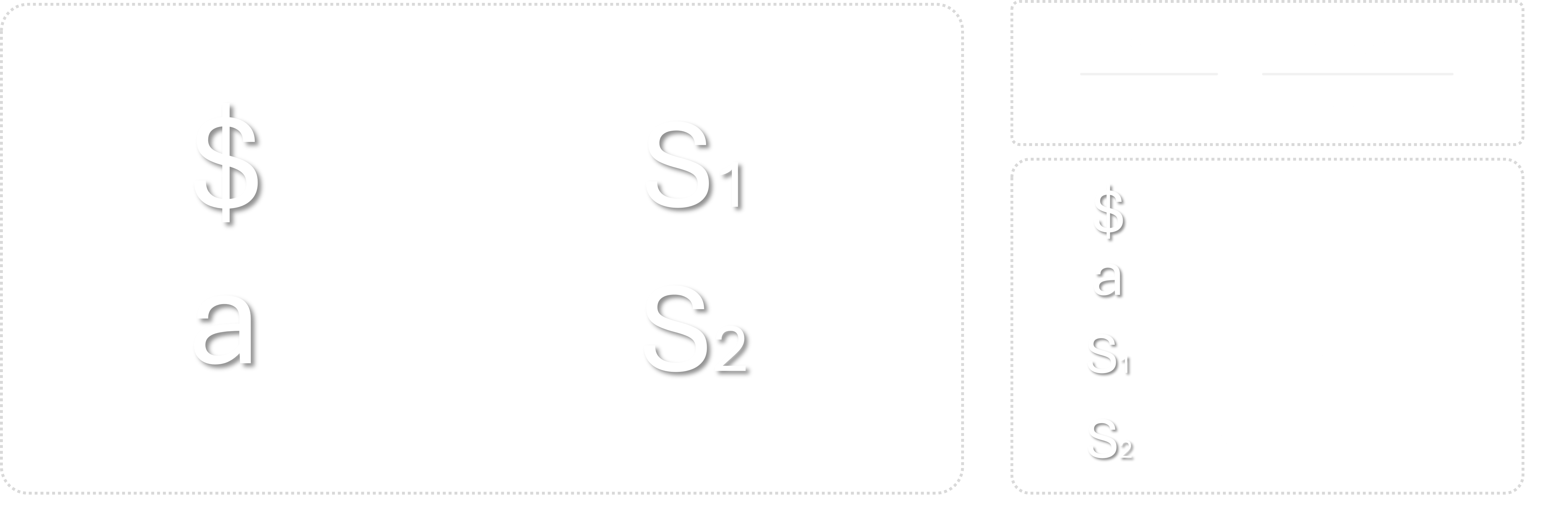
Discourse of artwork
Read this step as choosing the artwork's dominant speaking style: Signature, Archive, Scribble, or Errata. Judge it through two linked views: what leads in the discourse (style, knowledge, contradiction, or enigma), and which element takes structural lead (S1, S2, $, or a). Together, these cues identify the pattern that most strongly organizes the work.
Discourse Type
This artwork is dominated by the 'Scribble' discourse mode, in which the fundamental agent is the split between psychological yearning and the impossibility of closure. The master signifier resides not as a commanding frame but as a site repeatedly called upon by the work’s unresolved questioning—pulling the viewer into cycles of introspection and contradiction. This leads to the production of further analytic attempts and knowledge structures, as the player navigates between open-ended searching and formalized progression, ultimately fueling continuing reflection and affective engagement. The enigmatic avatar Yell is not resolved but serves as a truth-position—the object-cause behind the ongoing desire to interpret, solve, or understand, which never fully stabilizes. In this dynamic, every structural element participates in maintaining the central contradiction, sustaining an experience of pleasurable dissatisfaction and productive ambiguity.
Evidence: Description, Review, Others