
Deer Hunter
This output is interpretive artwork criticism only and not clinical diagnosis or therapy advice.
01 / About this report
FILE: ABOUT.TXT · READThis report is an interpretive and critical reading for Computational Media Artworks (CMAs). It uses the Subject-Structure-Discourse (SSD) framework, adapted from Lacanian psychoanalytic concepts, as an additional lens for understanding how an artwork operates. It is not a quality rating or value judgment of the work.
SSD approaches the artwork as an active subject that organizes concept, medium, discourse, and social bond in public form. The goal is to help artists, curators, and viewers access a psychoanalytic reading that clarifies what the work is doing. This model currently applies to CMA works and does not cover every category of art.
02 / Artwork Overview
FILE: ARTWORK_OVERVIEW.TXT · READSplit Subject
Neurotic-leaning artwork
The discourse of Artwork
03 / Subject Layer
FILE: SUBJECT.TXT · READThe Split Artwork ($)
Read the artwork as split in two layers: what it clearly shows and what it implies. Pay attention to the gap between these layers, where tension and contradiction often emerge.
Explicit Statement
The artwork presents an assemblage of archival footage, family home videos, and AI-generated sequences to form a speculative documentary. It centers around the artist’s relationship to the men in his family and introduces a synthetic white-tailed deer into real and reconstructed landscapes, combining new technology with intimate archival material.
Evidence: DescriptionDeer Hunter is an assemblage of archival footage, family home videos, and a speculative form of documentary produced using generative AI.The white-tailed deer occupies a central position throughout the film — at once an object of regarded beauty and a target for violence, particularly among men.
Implicit Enunciating
Beneath its visible setup, the work interrogates the transmission of masculinity and cultural memory through migration, familial ties, and the recombinatory powers of new technology. It questions how identities and ideologies are constructed and performed across generations, particularly in relation to sites of power, nature, and violence.
- Explores intergenerational passage of masculinities and myth via familial and national histories.
- Reflects on AI’s role in reconstructing, preserving, and potentially distorting memory and legacy.
- Highlights contradictions within historical and endangered cultural narratives.
Subject of Desire
Read the work through the Need-Demand-Desire chain: what motivates the work, what artistic means it asks for, and what unresolved remainder continues to drive it.
The Need
There is an urge to consciously examine, witness, and transmit personal and collective legacies of masculinity and origin before they are lost or mutated by contemporary shifts.
- Aims to connect familial histories with broader cultural narratives.
- Responds to urgency of articulating masculinity’s legacy across generations.
- Addresses the need to make intimate histories public before their context slips away.
The Demand
By directly combining archival video, generative AI, and live-action sequences, the work employs hybrid filmmaking as its critical artistic method and vehicle.
- Merges analog (archive, home video) and digital (AI-generated) material.
- Synthesizes factual and fictional forms to activate memory and myth.
- Uses technological mediation as a formal rule shaping the narrative.
The Desire
The work is haunted by the unresolvable friction between faithfully transmitting legacies and the distortions or ruptures that arise in translation—a gap exacerbated by the very technologies deployed to mediate continuity.
- Longs for authentic continuity amid intervention by new media.
- Struggles with maintaining integrity of memory through artificial reconstruction.
- Cannot fully close the distance between past and present selves or stories.
The Object-a
The white-tailed deer, recreated and interpolated by AI into historically loaded settings, stands as the persistent enigma—a presence that is both real and fabricated, beautiful and threatened, symbol and impossibility.
- Appears throughout the work as both artificial and natural.
- Focuses attention on boundaries between fact and fiction.
- Acts as a pivot for masculine performances around violence and care.
The Drive
The repeated cycle of reconstructing, interpolating, and recontextualizing archival and synthetic sequences—particularly the act of inserting the deer into various environments—creates an ongoing experience loop driving the artwork’s motion.
- Continuously repositions analog memory with generative interventions.
- Cycles through familial, cultural, and technological iterations.
- Articulates a loop between documentation and invention.
The Jouissance
Read jouissance as the work's satisfaction effect: how it fulfills or exceeds expectations for artist and audience, beyond simple enjoyment.
Explicit enjoyment
The precision of interpolating AI-generated deer into real documentary settings offers striking visual cohesion and technical finesse. The merging of home video textures with synthetic visuals gives the artwork a heightened realism amidst uncanny effects.
The careful curation of archival material alongside new footage demonstrates technical expertise in blending varied temporalities and formats.
- High level of craft in merging different image sources.
- Visually seamless integration of synthetic and documentary elements.
- Polished sequencing and montage strengthen viewer engagement.
Implicit enjoyment
There is deep intellectual satisfaction in the film’s self-reflexive use of technology to question its own role in shaping memory and inheritance. The work’s vulnerability—rooted in family archives—invites profound emotional resonance.
Through clever juxtaposition of archival and AI-driven fabrication, the film triggers reflective engagement with the ethical complexities of representing personal and collective histories.
- Conceptually rich tension between technology and memory.
- Poignant exploration of identity’s construction over time.
- Emotional immediacy drawn from intimate family material.
04 / Structure Layer
FILE: STRUCTURE.TXT · READThe formalization
Read formalization as the process that turns an intangible impulse into a shareable CMA artifact through recognizable artistic grammar: legible media carriers, interaction mechanisms, and technical protocols.
The Censorship
Read censorship as the filtering process that makes a work publicly readable through three forces: separation from the artist, platform or institutional framing, and wider public feedback.
Author separation
Andrew Herzog’s practice is rooted in exploring the boundaries between human and nonhuman experience, employing accessible technological and conceptual tools to probe lineage and ecological interconnection. His focus in Deer Hunter extends these inquiries into intimate, familial terrain, blending personal history with experimental methods. Herzog’s ethical orientation is evident in his circular methodologies and in his willingness to implicate his own medium choices within broader cultural and ecological questions.
- Herzog’s trajectory is shaped by a background in creative technology, design, and a drive to make complex concepts publicly accessible.
- The artist’s prior themes center on permeability between human and animal, using family and inheritance as recurrent motifs.
- His research consistently returns to the formal and ethical implications of using new technologies to confront questions of identity and memory.
Evidence: Biography, DescriptionDrawing on a background in creative technology and design, he develops accessible formal and conceptual languages through familiar materials and circular methodologies.
Platform ideology
Institutional framing spotlights Deer Hunter’s engagement with the political architectures of nationalism and their aftereffects. The platform situates the film inside broader cultural debates about power, memory, and the destabilizing potential of technological mediation. The curatorial logic credits the work not only for its technical experiment but for the way it reanimates ideological histories through personal and synthetic archives.
- Jury framing emphasizes the significance of nationalism, exceptionalism, and their destructive legacies as key context for the work.
- The curatorial statement values the artwork’s ability to embed personal and technological narratives within architectures of authority.
- Institution acknowledges the artwork’s hybrid method as a way to produce new modes of witnessing and questioning power.
Evidence: Platform, DescriptionOne of the fault lines in democracies now descending toward collapse is nationalism: its exceptionalism, supremacist logic, delusions of grandeur, and the militarization and weaponization of patriotism.
Other reviews
External/public feedback traces are limited, so the following is AI feedback: Deer Hunter is received as intimate and vulnerable in handling family archives, with the interplay of generative AI reinforcing both the documentary’s personal stakes and its broader societal resonance. The film’s hybrid structure—blending real and synthetic imagery—heightens its emotional impact and invites reflection on the ethics of memory reconstruction. Such careful integration of form and subject has the potential to foster both empathy and critical awareness in audiences.
- The work’s use of family archives cultivates a sense of intimacy and emotional vulnerability.
- Blending generative AI with archival footage generates layered resonance around technology’s role in shaping identity and memory.
- The ambiguous boundaries between real and synthetic documentary elements provoke ethical and affective reflection.
Evidence: Review, DescriptionYour family archive gives the work a strong sense of intimacy and vulnerability.
Structure mode
Read structure mode as a classification of the concept-form relation after formalization and censorship: Psychotic-leaning (concept > form), Perverse-leaning (form > concept), or Neurotic-leaning (form approximately concept).
Mode type
Deer Hunter achieves a neurotic-leaning structure, balancing its conceptual ambitions with a carefully constructed hybrid form. The work’s technical and narrative innovation does not overpower its identity-focused inquiry; instead, each supports and challenges the other in productive tension.
By integrating personal, historical, and synthetic elements, the film renders its complex themes publicly readable. The mastery of formal means and conceptual clarity results in a work that is accessible yet philosophically open, drawing viewers into its layered meditations on heritage, violence, and mediation.
Evidence: Biography, Platform, Review, DescriptionSubtype
The rhetoric and closure of Deer Hunter suggest a hysteric-leaning subtype, as the film persistently opens questions around masculinity, inheritance, and the ethical implications of technological mediation. Rather than arriving at a strict answer, the structure cultivates ambiguity and generativity, especially at the intersection of real and artificial imagery.
This open-endedness, reinforced by the unresolved circular journey and the interplay between documentary and constructed narrative, invites recursive reflection rather than final resolution. The lack of a closed mapping ensures ongoing engagement with the film’s difficult histories and emergent futures.
Evidence: Description, Review05 / Discourse Layer
FILE: DISCOURSE.TXT · READFour elements
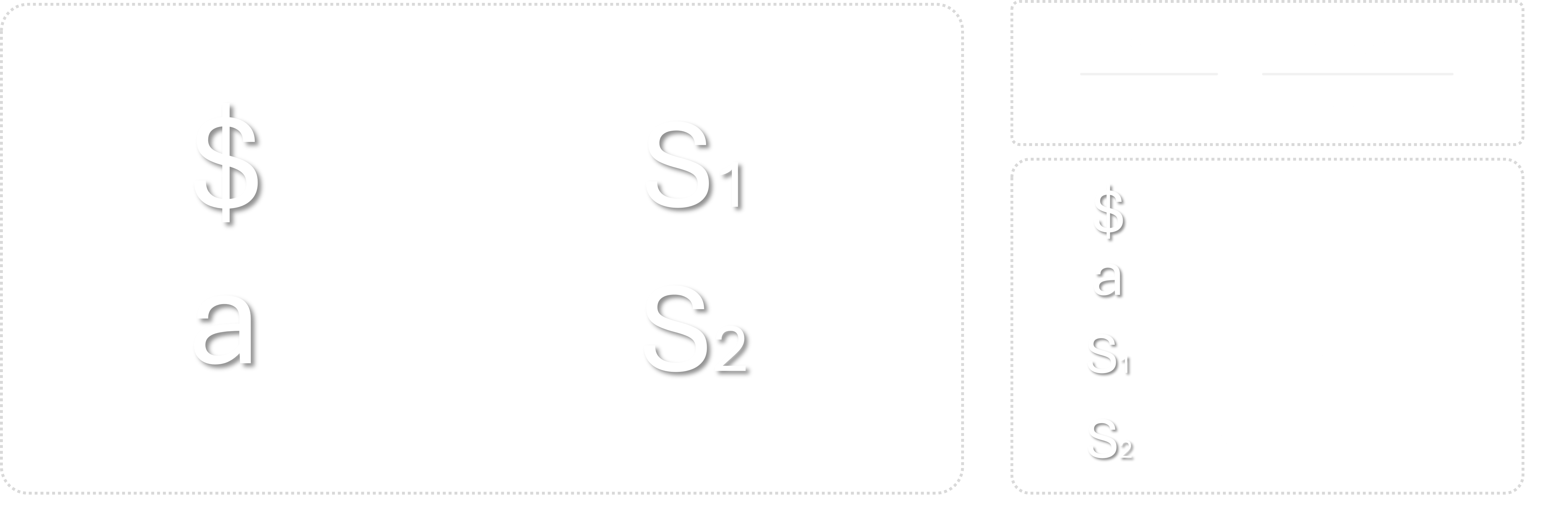
Read the work through four discourse elements: S1, S2, a, and $. In 3.1.1-3.1.4, assign one primary candidate to each element by building on the Subject Layer (1.0) and Structure Layer (2.0). These elements work together as one system for reading how the artwork speaks.
Master signifier (S1)
The work can be compactly recognized as a 'Synthetic Legacy Documentary,' foregrounding the hybridization of personal archive and generative AI. This label captures how the film stages authenticity and invention together, making the process of inheritance its most salient feature. The work brands itself through the orchestration of legacy and mediation.
Evidence: Review, DescriptionKnowledge (S2)
The underlying knowledge structure is a hybrid archival-generative system, authorizing the film’s ability to revisit, reconstruct, and recontextualize memory. This system is both formal and conceptual, uniting traditions of documentary evidence with the operations of AI interpolation. The work draws legitimacy from this composite logic.
Evidence: Description, BiographyEnigma (a)
The central enigmatic element is the interpolated white-tailed deer inserted by AI into Rome’s monumental Fascist-era architecture—a presence that is at once haunting, beautiful, and conceptually alien. This concrete object indexes themes of displacement and awkward inheritance, continually drawing attention to processes of artificiality and narrative disruption. The deer becomes the unresolved kernel around which meaning swirls.
Evidence: Description, PlatformContradictions ($)
At the work’s core is the tension between documentary truth and technological fabrication. The film stages this split at every level, contrasting family archives and historical footage with generative, often uncanny, reconstructions of memory and landscape. This dichotomy shapes the viewer’s experience, inviting continual reflection on authenticity and mediation.
Evidence: Review, DescriptionPositions
Read Agent - Other - Production - Truth as a fixed discourse vector: the stable route through which discourse is organized. Agent initiates, Other is addressed, Production is generated, and Truth remains the hidden driver. This step maps S1, S2, a, and $ into these positions to reveal the discourse pattern.
Discourse of artwork
Read this step as choosing the artwork's dominant speaking style: Signature, Archive, Scribble, or Errata. Judge it through two linked views: what leads in the discourse (style, knowledge, contradiction, or enigma), and which element takes structural lead (S1, S2, $, or a). Together, these cues identify the pattern that most strongly organizes the work.
Discourse Type
Deer Hunter most powerfully occupies the Scribble position, with contradiction (Documentary truth vs Technological fabrication) driving the artwork’s entire expressive economy. Here, the split between authenticity and mediation (Agent) continually unsettles the viewing position, compelling the audience (Other) to search for a stable frame (Master signifier—'Synthetic Legacy Documentary') that never fully resolves the field. This lack incites new knowledge-orders and systematizations (Production—'Hybrid archival-generative system') in an attempt to narrate or stabilize the unresolvable tension, but the enigmatic object (Truth—the 'Interpolated deer in Fascist architecture') persists, fueling recursive reflection. Through its sustained play of contradiction and irresolution, the work implicates viewers in its own open-ended field of anxiety and questioning.
Evidence: Review, Description, Platform