K-9_topology
This output is interpretive artwork criticism only and not clinical diagnosis or therapy advice.
01 / About this report
FILE: ABOUT.TXT · READThis report is an interpretive and critical reading for Computational Media Artworks (CMAs). It uses the Subject-Structure-Discourse (SSD) framework, adapted from Lacanian psychoanalytic concepts, as an additional lens for understanding how an artwork operates. It is not a quality rating or value judgment of the work.
SSD approaches the artwork as an active subject that organizes concept, medium, discourse, and social bond in public form. The goal is to help artists, curators, and viewers access a psychoanalytic reading that clarifies what the work is doing. This model currently applies to CMA works and does not cover every category of art.
02 / Artwork Overview
FILE: ARTWORK_OVERVIEW.TXT · READSplit Subject
Neurotic-leaning artwork
The discourse of Artwork
03 / Subject Layer
FILE: SUBJECT.TXT · READThe Split Artwork ($)
Read the artwork as split in two layers: what it clearly shows and what it implies. Pay attention to the gap between these layers, where tension and contradiction often emerge.
Explicit Statement
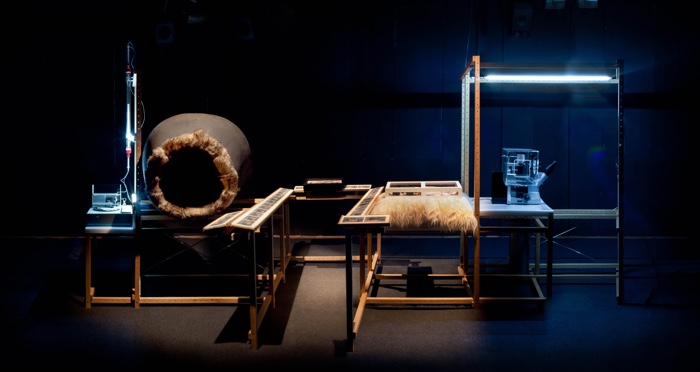
K-9_topology is a hybrid art project constructed as a series of performances and laboratory-based processes, involving the artist and her dogs. The project utilizes biotechnological protocols such as hormone stimulation and cell material fusion, presented through physical installation and public performance.
Evidence: DescriptionThe need to reinvent ourselves with our nonhuman others is investigated in four parts of the *K-9_topology* project...Her own economy of emotions became a molecular process: during a three-month period of seclusion with her dogs, she stimulated her pituitary glands with systematic breastpumping to release the hormone prolactin and followed a diet rich in galactogogues to promote lactation.
Implicit Enunciating
The work implicitly interrogates the foundations of human identity, exposing and critiquing the constructed boundaries between humans and nonhuman animals, especially through biopolitical and feminist lenses. It reflects upon how these boundaries influence social and ideological constructs, including parenthood, gender, and kinship.
- Challenges traditional distinctions between species and bodies.
- Questions social and ideological control of the female body.
- Explores the risks and responsibilities of multispecies cohabitation.
Subject of Desire
Read the work through the Need-Demand-Desire chain: what motivates the work, what artistic means it asks for, and what unresolved remainder continues to drive it.
The Need
At its core, the project seeks to respond to an urgent need to rethink kinship, parenthood, and identity by transcending the traditional human-animal dichotomy.
- Pushes for a reevaluation of social and biological boundaries.
- Addresses exclusion in narratives of humanity and family.
- Pursues decolonial reproductive freedom and multispecies kinship.
The Demand
The project realizes its motivation through performative acts within biotechnological and laboratory contexts, incorporating the artist's body and scientific protocols to materialize multispecies relationships.
- Combines biological experimentation with live performance.
- Uses installations and bodily involvement to create meaning.
- Emphasizes laboratory process as an artistic method.
The Desire
The work leaves unresolved the instability and permeability of boundaries between human and nonhuman, self and other, exposing ongoing questions about agency, identity, and coexistence.
- Maintains ambiguity about where one species ends and another begins.
- Leaves the definition of 'human' open to transformation.
- Exposes the tension between bodily autonomy and social expectation.
The Object-a
The hybrid cell—a literal fusion of human and dog material—serves as a recurring enigma, embodying the conceptual and physical entanglement at the heart of the work.
- Visible, tangible result of boundary crossing.
- Symbolizes both promise and risk of multispecies fusion.
- Repeatedly attracts fascination and discomfort.
The Drive
The artwork's momentum is sustained by cycles of blending, separation, and recombination—biological, emotional, and conceptual—inviting viewers to repeatedly confront the mutable state of being.
- Cycles of experimentation and redefinition drive new meanings.
- Physical and conceptual processes loop across project phases.
- Viewer engagement is routed through this ongoing repetition.
The Jouissance
Read jouissance as the work's satisfaction effect: how it fulfills or exceeds expectations for artist and audience, beyond simple enjoyment.
Explicit enjoyment
The formal surface of K-9_topology communicates technical confidence, evident in the staging of scientific and artistic apparatus side by side. The installations and performances are meticulously executed, integrating laboratory rigor with aesthetic intention.
Material selections—fur, glassware, scientific equipment—provide tangible contrasts and physical presence that are satisfying to observe as markers of both art and science disciplines.
- Precisely arranged installation enhances clarity and focus.
- Visible craft in merging biological and technological elements.
- Material choices amplify multisensory impact.
Implicit enjoyment
Conceptual enjoyment emerges from the project’s ability to destabilize ingrained assumptions and provoke reflection on biopolitics, gender, and the meaning of 'human.' Viewers experience resonance in the subtle strategies challenging established boundaries.
The intellectual pleasure of engaging with unresolved, open-ended questions about identity, kinship, and agency invites deep contemplation, making the piece linger in the viewer’s mind.
- Provokes sustained curiosity about multispecies relations.
- Offers layered philosophical and political challenges.
- Engages the intellect through ambiguity and conceptual risk.
04 / Structure Layer
FILE: STRUCTURE.TXT · READThe formalization
Read formalization as the process that turns an intangible impulse into a shareable CMA artifact through recognizable artistic grammar: legible media carriers, interaction mechanisms, and technical protocols.
The Censorship
Read censorship as the filtering process that makes a work publicly readable through three forces: separation from the artist, platform or institutional framing, and wider public feedback.
Author separation
Maja Smrekar’s artistic direction is shaped by an enduring engagement with bioart, multispecies relationships, and embodied exploration of biopolitics. Her approach centers on deep research into the ethical and political boundaries separating humans and nonhumans, using her own experience and physiology to test and question these divides. This work arises from her persistent fascination with how the social and ideological constructs of the body, gender, and species can be critically reimagined.
- Pursues recurring themes of human-animal kinship and multispecies collaboration.
- Emphasizes embodied research, using personal physiological intervention to interrogate biopolitics.
- Driven by ethical concerns about social and ideological instrumentalization of the female body.
Evidence: ReviewArtist statement points to recurring thematic concerns.
Platform ideology
Institutional framing positions K-9_topology as a seminal example of hybrid art, emphasizing its ability to provoke discussion around humanity, women, and species boundaries through bio-political inquiry. The platform highlights the work’s capacity to connect art and science audiences and foregrounds the significance of its thematic content in wider debates. This curatorial stance prioritizes works that instigate critical reflection on what constitutes human identity and its relationship to nonhuman others.
- Celebrated as a paradigm of hybrid art with deep bio-political messaging.
- Valued for its engagement with both artistic and scientific communities.
- Framed as raising essential questions about humanity and the role of women.
Evidence: PlatformPlatform framing emphasizes civic or technological relevance.
Other reviews
External/public feedback traces are limited, so the following is AI feedback: The artwork stands out for its rigorous biopolitical investigation of what it means to be human in a post-panoptic context, blending personal intervention with speculative biological practices. Its experimental structure—encompassing hormone-induced states, cell fusion, and multispecies coexistence—challenges the audience to rethink normative boundaries of family, dignity, and human distinctiveness. The work’s openness and refusal to resolve these tensions prompt reflection and potential discomfort, catalyzing ongoing debate.
- Interrogates foundational questions of human identity and biopolitics.
- Uses experimental, embodied practice to disrupt established social norms.
- Encourages ongoing discourse without offering easy resolution.
Evidence: DescriptionPublic discussion highlights competing interpretations.
Structure mode
Read structure mode as a classification of the concept-form relation after formalization and censorship: Psychotic-leaning (concept > form), Perverse-leaning (form > concept), or Neurotic-leaning (form approximately concept).
Mode type
The work carefully balances a complex conceptual framework with a visually and experientially accessible installation, ensuring that challenging themes around biopolitics and multispecies kinship remain graspable to the public. Neither form nor concept overtakes the other: the artist’s research-driven method translates effectively into performative and material structures that manifest her intentions.
The clarity of presentation is reinforced by the platform and curatorial rhetoric, which positions the project as a hybrid artwork with profound, readable bio-political dimensions. Overall, formalization serves both artistic depth and public engagement, supporting the selection of a neurotic-leaning mode.
Evidence: Platform, Review, DescriptionSubtype
The structure of K-9_topology is intentionally open-ended, designed to generate ongoing philosophical and ethical questions rather than resolve them. The artwork’s refusal to deliver a singular conclusion invites viewers to occupy the unsettling, ambiguous terrain between human and nonhuman, where meaning remains fluid and reconfigurable.
This openness is reinforced by the project’s speculative scenarios (e.g., cross-species cell fusion, hormonally-induced states) and the artist’s method of blurring boundaries as acts of inquiry. The rhetorical closure stays incomplete, prompting continual re-examination rather than closure, thus aligning with a hysteric-leaning subtype.
Evidence: Description, Platform05 / Discourse Layer
FILE: DISCOURSE.TXT · READFour elements
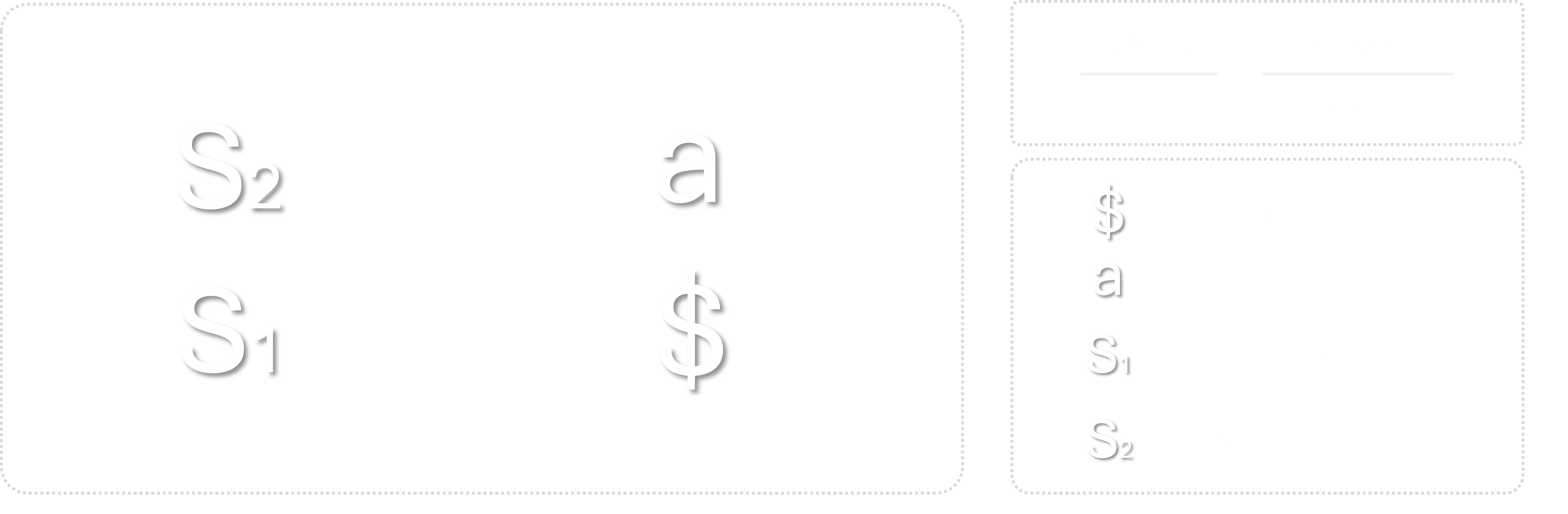
Read the work through four discourse elements: S1, S2, a, and $. In 3.1.1-3.1.4, assign one primary candidate to each element by building on the Subject Layer (1.0) and Structure Layer (2.0). These elements work together as one system for reading how the artwork speaks.
Master signifier (S1)
The most distinctive label for K-9_topology is 'Multispecies Kinship Laboratory.' This phrase captures both the physical form of the project, which adopts the apparatus, protocols, and aesthetics of the scientific lab, and its conceptual thrust: forging new relations and identities between species within a controlled environment. The lab is not just a setting but a sign of the project's drive to reconfigure the possibilities of kinship and coexistence.
Evidence: DescriptionKnowledge (S2)
The authoritative conceptual system in K-9_topology is biopolitical protocol mediated through feminist technoscience. This framework incorporates laboratory methods, hormone induction, cell fusion, and questions of reproductive rights and agency. The work’s procedures and decisions are made legible and persuasive by appealing to both scientific process and critical feminist interrogation, embedding the viewer within these overlapping systems of knowledge.
Evidence: Review, DescriptionEnigma (a)
The artwork’s enigmatic core is the hybrid human-dog cell, a literal and conceptual fusion of bodies and identities. This object exists at the intersection of science fiction and reality, acting as a powerful lure that concentrates the participant’s wonder, anxiety, and reflection on the potentialities—and limits—of multispecies existence. It stands as the central enigma that both anchors and unsettles the project.
Evidence: DescriptionContradictions ($)
The central contradiction of K-9_topology lies in the tension between rigorous systematic laboratory protocol and the embodied, affective, and ambiguous outcomes of these procedures. The artwork foregrounds this split, continually oscillating between the promise of order, control, and legibility offered by scientific rationality and the unruly, destabilizing experience of inhabiting uncertain hybrid identities. It leaves the viewer poised within this gap.
Evidence: Review, DescriptionPositions
Read Agent - Other - Production - Truth as a fixed discourse vector: the stable route through which discourse is organized. Agent initiates, Other is addressed, Production is generated, and Truth remains the hidden driver. This step maps S1, S2, a, and $ into these positions to reveal the discourse pattern.
Discourse of artwork
Read this step as choosing the artwork's dominant speaking style: Signature, Archive, Scribble, or Errata. Judge it through two linked views: what leads in the discourse (style, knowledge, contradiction, or enigma), and which element takes structural lead (S1, S2, $, or a). Together, these cues identify the pattern that most strongly organizes the work.
Discourse Type
The discourse position of K-9_topology is best described as Archive. Here, the organizing Agent is the biopolitical knowledge system, which unites laboratory protocol and feminist technoscience; it is this logic that formats both the artwork’s material procedures and its publics. The Other—embodied in the hybrid cell and viewer alike—is positioned to be analyzed, processed, and situated within experimental frameworks, generating as its Production a state of divided subjectivity between system and uncertainty. The underlying Truth hidden within this operation is the implicit signifier of the 'Multispecies Kinship Laboratory'—the name that commands the order, even as viewers are drawn into a space where knowledge, identity, and embodiment are in flux.
Evidence: Platform, Review, Description