Ephemera: Language as virus
This output is interpretive artwork criticism only and not clinical diagnosis or therapy advice.
01 / About this report
FILE: ABOUT.TXT · READThis report is an interpretive and critical reading for Computational Media Artworks (CMAs). It uses the Subject-Structure-Discourse (SSD) framework, adapted from Lacanian psychoanalytic concepts, as an additional lens for understanding how an artwork operates. It is not a quality rating or value judgment of the work.
SSD approaches the artwork as an active subject that organizes concept, medium, discourse, and social bond in public form. The goal is to help artists, curators, and viewers access a psychoanalytic reading that clarifies what the work is doing. This model currently applies to CMA works and does not cover every category of art.
02 / Artwork Overview
FILE: ARTWORK_OVERVIEW.TXT · READSplit Subject
Neurotic-leaning artwork
The discourse of Artwork
03 / Subject Layer
FILE: SUBJECT.TXT · READThe Split Artwork ($)
Read the artwork as split in two layers: what it clearly shows and what it implies. Pay attention to the gap between these layers, where tension and contradiction often emerge.
Explicit Statement
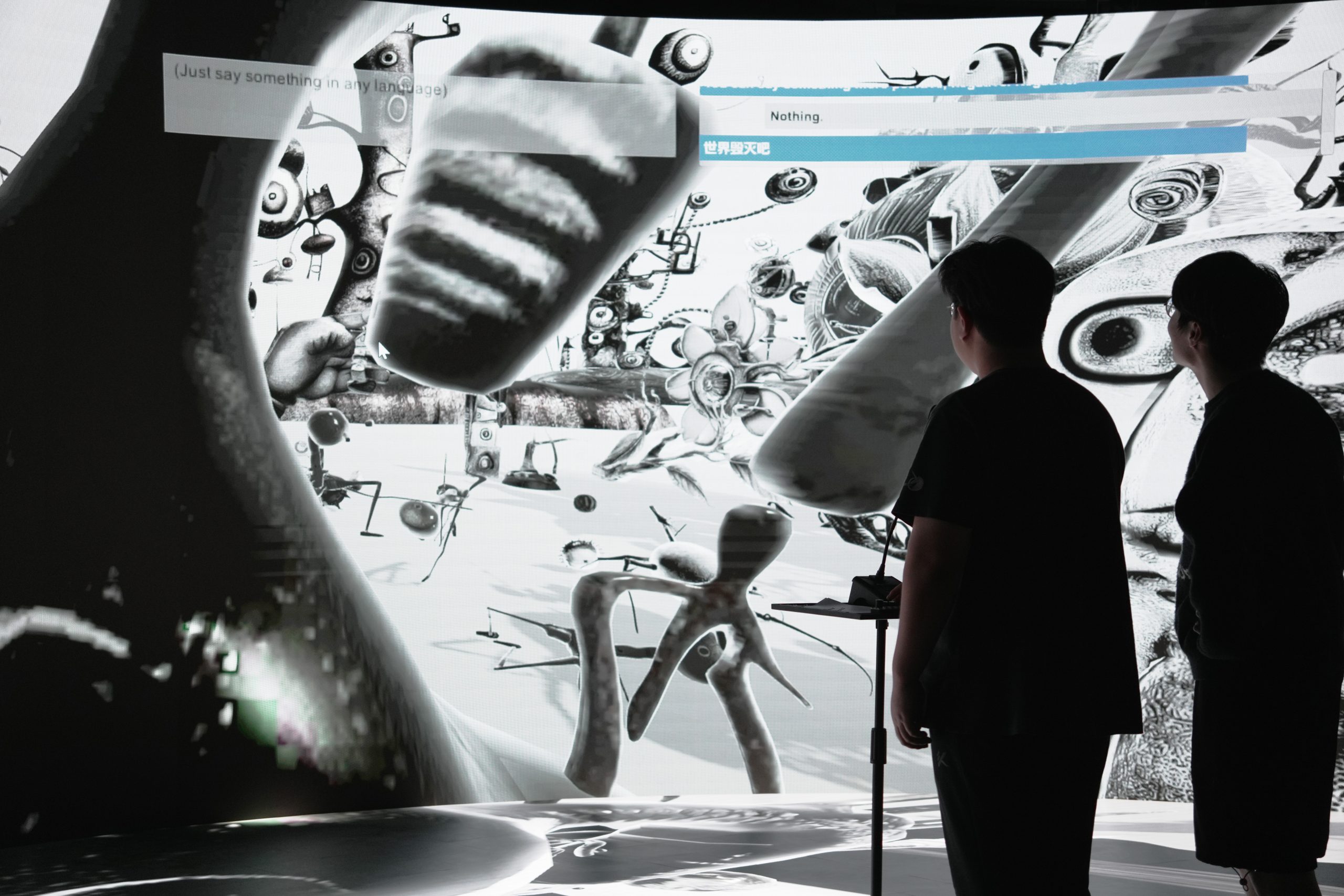
Ephemera is an AI-driven, speech-based interactive art installation where audience speech input triggers generative visual representations of taboo language and censorship through immersive technology. The work visualizes these taboo-triggered events as digital virus-agents within a simulated ecosystem, making the mechanics of language dissemination visible and experiential.
Evidence: Platform, DescriptionThis paper presents Ephemera, an AI-driven interactive art installation that explores linguistic taboos and censorship through immersive technology.We aim to confront audiences with the power of language through visualization, prompting introspection regarding unconscious discourse in daily interactions or social media.
Implicit Enunciating
Beneath its interactive surface, Ephemera questions the latent power of language and highlights the persistence of social taboos even within digital spaces. The work prompts viewers to reflect on their relationship to language, censorship, and the boundaries of communication enforced or revealed by technology.
- Interrogates the psychological and societal effects of taboo and censored language.
- Explores how technology both reveals and polices unconscious aspects of daily speech.
- Challenges audiences to confront their complicity in language-based exclusion and self-censorship.
Subject of Desire
Read the work through the Need-Demand-Desire chain: what motivates the work, what artistic means it asks for, and what unresolved remainder continues to drive it.
The Need
Ephemera arises from the necessity to illuminate and question how taboo and censorship influence everyday language, both consciously and unconsciously.
- Social norms and technology restrict permissible communication.
- Censorship shapes how language circulates and mutates.
- Unconscious language patterns deserve critical exposure.
The Demand
To pursue its urgent inquiry into language and taboo, Ephemera adopts the artistic form of an interactive installation driven by speech recognition and AI-powered visualization.
- Employs real-time speech analysis to detect taboo content.
- Generates visual 'virus-agents' in response to participant input.
- Immerses audiences in an evolving digital ecosystem shaped by their words.
The Desire
Ephemera leaves unresolved the deeper dynamics of how taboos spread, mutate, and resist clear containment—even as technology attempts to police or visualize them.
- Spread of taboo language remains unpredictable.
- Technological mediation cannot fully control meaning.
- Audience confronts their inability to purge linguistic impurities.
The Object-a
A persistent enigma in Ephemera is the recurring visual figure of the 'virus-agent'—an AI-generated, surreal digital entity manifesting each time taboo language is detected and forever oscillating between predator and prey within the ecosystem.
- Appears whenever banned language is spoken.
- Takes on surreal, abstract forms unique to each recognition event.
- Perpetuates visual intrigue and interpretive ambiguity.
The Drive
The work sustains itself through an endless loop: participants speak, the system detects, generates, and stages new viral forms, reactivating the audience’s engagement and reflection with each utterance.
- Each act of speech risks producing new taboo content.
- AI analysis and generative visualization repeat for every input.
- Cycle ensures constant renewal and confrontation with taboo.
The Jouissance
Read jouissance as the work's satisfaction effect: how it fulfills or exceeds expectations for artist and audience, beyond simple enjoyment.
Explicit enjoyment
Ephemera offers a technically sophisticated, polished interactive experience, allowing audiences to see their spoken language translated instantly into complex visual forms. The immediacy and clarity of the system’s response establish compelling cause-and-effect, making the technological craft and immersive display tangibly satisfying.
The AI's seamless integration of participant speech and generative visualization demonstrates a high level of technical execution, contributing to the sense of awe and novelty for viewers engaging the system.
- Real-time language recognition and visual feedback.
- Immersive, cohesive display environment.
- Clear participant-system interaction loop.
Implicit enjoyment
Conceptually, Ephemera delights in the provocative act of turning personal speech into a visible, shareable, viral entity, subverting the very principles of censorship by making taboos manifest and public. The reflective pleasure comes from implicating the audience in a cycle of linguistic contagion and questioning the limits of what can be said or shown.
Audiences are drawn into an intellectual and psychological interplay, experiencing the tension and contradiction between the urge for free expression and the rules governing social discourse, thereby producing a unique satisfaction grounded in critical engagement.
- Transforms taboo exposure into a shared, reflective spectacle.
- Encourages intellectual interrogation of social prohibitions.
- Satisfies curiosity about AI's limits in policing language.
04 / Structure Layer
FILE: STRUCTURE.TXT · READThe formalization
Read formalization as the process that turns an intangible impulse into a shareable CMA artifact through recognizable artistic grammar: legible media carriers, interaction mechanisms, and technical protocols.
The Censorship
Read censorship as the filtering process that makes a work publicly readable through three forces: separation from the artist, platform or institutional framing, and wider public feedback.
Author separation
Jiayang Huang’s work is grounded in a deep engagement with linguistic taboos and the psychological implications of language within social contexts, approached through the lens of new media and artificial intelligence. His artistic research trajectory demonstrates sustained focus on exploring the unconscious dynamics of language, utilizing AI both as tool and subject matter for challenging social norms. This project advances his ongoing inquiry by synthesizing technology and artistic vision in the pursuit of introspective and societal critique.
- The artist purposefully investigates the relationship between technology, subjectivity, and the unconscious through media art.
- There is a persistent focus on language’s hidden power and its cultural or psychological restrictions.
- The choice of AI as both material and metaphor is tightly linked to Jiayang’s ongoing research interests.
Evidence: Biography, DescriptionArtist statement points to recurring thematic concerns.
Platform ideology
Institutionally, the work is framed as a technologically sophisticated response to issues of censorship and linguistic taboo, emphasizing the use of AI to interrogate cultural boundaries. The curatorial agenda foregrounds the project’s relevance to post-pandemic reflections on language and power, valuing its immersive and analytic capacities. Within this framing, Ephemera is positioned as a leading example of art-tech fusion that tackles pressing socio-cultural questions.
- The platform highlights Ephemera’s role in critically exploring censorship and linguistic limitations via interactive technology.
- Curatorial placement leverages current themes of social boundaries and transformative pandemic-era language.
- The work is seen as a model for utilizing AI in immersive explorations of cultural phenomena.
Evidence: PlatformPlatform framing emphasizes civic or technological relevance.
Other reviews
External/public feedback traces are limited, so the following is AI feedback: Ephemera stands out as an artwork that invites viewers to directly confront the mechanisms behind the spread and policing of language, employing AI-driven visualizations as an effective vehicle for reflection. Its approach bridges the gap between personal self-examination and broader questions of social censorship, sparking awareness of unconscious bias in everyday communication. The work is poised to generate discussion on the intersection of art, technology, and the evolving nature of taboos.
- AI-based visualization personalizes the experience of taboo and censorship for each participant.
- The project provokes reflection on how technological systems detect, embody, or suppress contested language.
- Ephemera fosters dialogue about the shifting boundaries of language and social acceptability.
Evidence: DescriptionPublic discussion highlights competing interpretations.
Structure mode
Read structure mode as a classification of the concept-form relation after formalization and censorship: Psychotic-leaning (concept > form), Perverse-leaning (form > concept), or Neurotic-leaning (form approximately concept).
Mode type
Ephemera achieves a dynamic equilibrium between conceptual ambition and its public-facing form by structuring audience interaction through AI-driven, rule-based mechanisms that clearly embody the project’s thematic concerns. This results in an artwork where individual experience, formal organization, and critical inquiry support one another, making the work publicly legible while retaining conceptual richness.
The mechanisms of speech recognition, AI visualization, and taboo transformation reinforce a shared artistic grammar accessible to the audience, placing as much weight on how the work operates as what it represents. This balance affirms the categorization of the piece as neurotic-leaning, where the interplay of form and concept is neither fractured nor unilaterally dominated by technique or theme.
Evidence: Platform, DescriptionSubtype
The structure of Ephemera leaves interpretive space open by refusing a fixed narrative or definitive resolution as to what ‘viral language’ ultimately means or how participants should regard their own speech. The system’s poetic metaphors and surreal visual language prompt ongoing introspection, intentionally withholding closure to stimulate further questioning.
Rather than providing a closed, didactic mapping of taboo to visual outcome, the project mobilizes productive ambiguity: each user’s engagement yields unique combinations and fleeting visualizations. This open-ended, generative structure aligns with a hysteric-leaning neurotic subtype, privileging ongoing discourse over finite conclusions.
Evidence: Platform, Description05 / Discourse Layer
FILE: DISCOURSE.TXT · READFour elements
Read the work through four discourse elements: S1, S2, a, and $. In 3.1.1-3.1.4, assign one primary candidate to each element by building on the Subject Layer (1.0) and Structure Layer (2.0). These elements work together as one system for reading how the artwork speaks.
Master signifier (S1)
The core recognition phrase for this work is 'Taboo-virus engine,' capturing its distinctive combination of AI-driven taboo detection and the generative visualization of linguistic 'viruses.' This naming foregrounds the operational mechanism—a fusion of forbidden discourse and autonomous digital processes—as the work’s defining trait, allowing for immediate recognition in discourse and presentation contexts. This signifier anchors interpretation across its formal and thematic moves.
Evidence: Description, PlatformKnowledge (S2)
Ephemera is legitimated and structured by an 'AI-driven taboo protocol': a system founded on algorithmic speech recognition, automated filtering of prohibited language, and the dynamic translation of this input into visual agents according to a regulatory logic. The legitimacy and intelligibility of the piece depend on the viewer understanding and submitting to this rule-based, systematized approach to language policing and generative response.
Evidence: Platform, DescriptionEnigma (a)
At the core of the work’s unresolved fascination is the ‘surreal virus-agent’—the AI-created digital embodiment of the participant’s taboo language, alternating between predator and prey inside the ecosystem. This enigmatic, pointable figure anchors the attraction and gaze of the audience, materializing the otherwise invisible ambiguity of forbidden speech.
Evidence: DescriptionContradictions ($)
The central contradiction in Ephemera is between 'control through exposure' and 'uncontrollable spread.' The work simultaneously visualizes the policing of taboo and acknowledges the irrepressible, viral proliferation of forbidden discourse, staging a tension between the authority of technological surveillance and the subversive vitality of suppressed language. This tension remains productive rather than fully resolved.
Evidence: Description, PlatformPositions
Read Agent - Other - Production - Truth as a fixed discourse vector: the stable route through which discourse is organized. Agent initiates, Other is addressed, Production is generated, and Truth remains the hidden driver. This step maps S1, S2, a, and $ into these positions to reveal the discourse pattern.
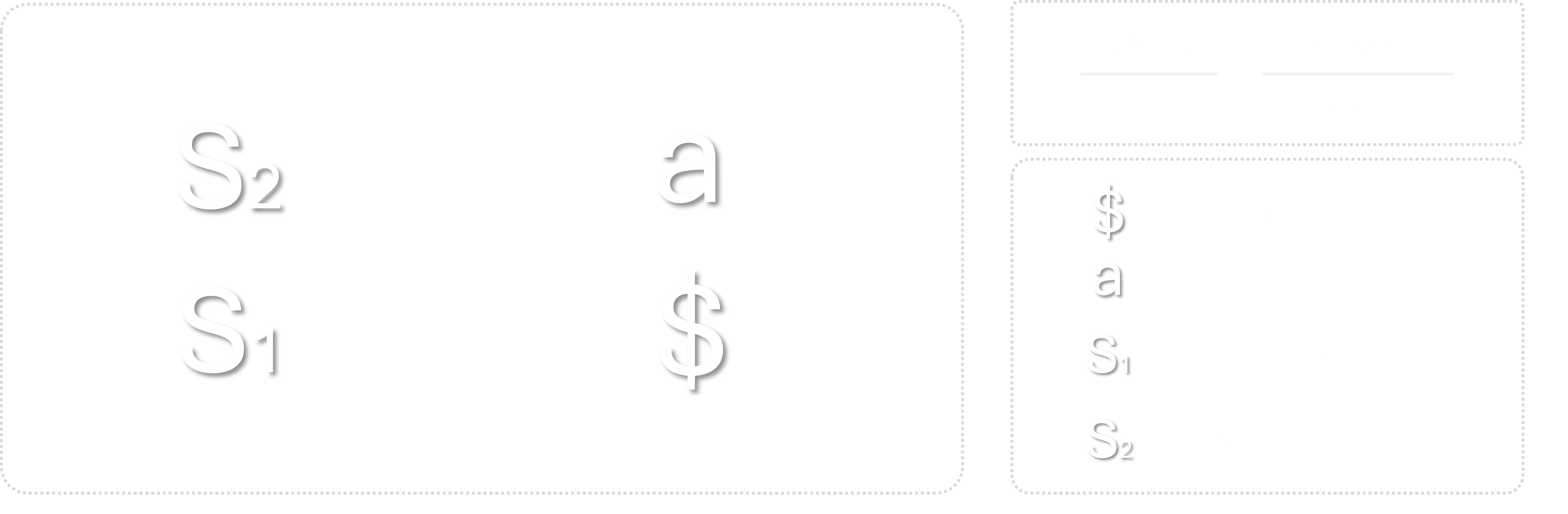
Discourse of artwork
Read this step as choosing the artwork's dominant speaking style: Signature, Archive, Scribble, or Errata. Judge it through two linked views: what leads in the discourse (style, knowledge, contradiction, or enigma), and which element takes structural lead (S1, S2, $, or a). Together, these cues identify the pattern that most strongly organizes the work.
Discourse Type
Ephemera is organized primarily by an archive logic in which the AI-driven taboo protocol occupies the Agent position, methodically monitoring, classifying, and generating responses to audience speech. The viewer becomes the Other, absorbed and processed within the system as subject to its logics of detection and transformation. This relation produces a divided stance: participants witness their linguistic productions turned into visible agents of contagion or control, revealing their own involvement with language policing. Underpinning the entire system is the work’s foundation on a viral-expression engine—the signifying power of forbidden speech rendered technical—as the Truth that grounds the operative order of the installation. Thus, it is the authority and structure of knowledge, rule, and system that fundamentally organize the artwork’s address, positioning Ephemera as archetypal Archive.
Evidence: Platform, Description